
the worker bees.. and AI
market vibes


Since the founding of the nation, America has argued for two centuries over whether a central bank is constitutional. Hamilton insisted it was necessary. Jefferson and Madison said no. Hamilton wanted a national bank to manage the federal debt and issue a uniform currency. Jefferson and Madison replied that no such authority exists in the Constitution.
Hamilton’s bank favored wealthy merchants and speculators over ordinary citizens. It still does. It concentrated dangerous financial power in unelected hands. It still does. Hamiltonians want strong federal financial institutions. Jeffersonians distrust centralized financial power.
The first Hamiltonian charter expired in 1811. In 1816, the Second Bank of the United States was chartered under Nicholas Biddle, a Philadelphia aristocrat and influential financier. Biddle financed canals, roads, western expansion, northern factories, and the southern slave economy. He himself made a famously failed attempt to corner the cotton market.
In 1832, President Andrew Jackson vetoed the bill to renew the Second Bank’s charter … one of the most famous vetoes in American history … and set a powerful political and constitutional precedent. For the next 80 years, America operated with essentially free banking by specific charter until the Panic of 1907. Only then did distrust of central banks finally give way to the creation of the Federal Reserve in 1913.
The ethos of that second national bank, formally named “The President, Directors, and Company of the Bank of the United States” has never really changed … except for the formal addition of “lender of last resort” in 1913. The price of that unique power was and is a 99% debasement of the American dollar. To this day, the Federal Reserve’s stated policy is to debase the currency at 2% per year, forever.
The Federal Reserve, its governors and the Open Market Committee are as divided as Hamilton and Jefferson. It is for that reason I’ve penned a brief history of the “Second Bank” that you might have it fresh in mind as today’s essay unfolds.
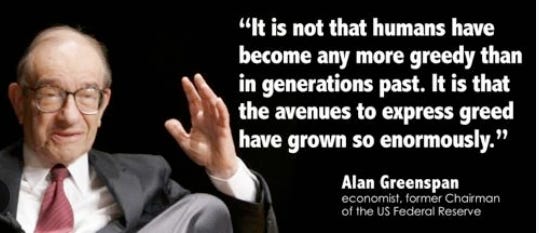
Forty years ago, Nobel laureate Robert Solow famously said, “You can see the computer age everywhere except in the productivity statistics” because it took years for tech innovation to show up in output-per-worker numbers. Businesses needed time to redesign workflows and infrastructure but eventually, hedonics kicked in, and Alan Greenspan became the maestro of low-rate, non-inflationary growth for 18 years.
What Solow’s paradox revealed and Greenspan understood, was that sometimes compaines need years to capitalize on new technologies. This isn’t happening with AI. With AI, the lag has collapsed.
For instance, xAI’s Colossus 1 facility in Memphis was built by repurposing a vacant Electrolux factory. Construction began in April 2024 and the facility was officially brought online in about 122 days. Today Nvidia and Google are among its biggest customers. Productivity is exponentiating while worker output, relative to AI efficiencies, is vanishing at an alarming rate.
Last Friday the BLS revised March NFP up 29k and April up 64k, for a combined 93k addition to a booming outlier of 172k new jobs in May. However, 80% of new jobs came from low-paying, hourly, non-supervisory jobs while many high-paying jobs were down. So I went digging into the report.
Instead of topline numbers, I measured the dollar value of jobs created and jobs lost in the aggregate so far this year. “Stunning” just doesn’t quite say it. Here’s what I found.
AI is everywhere now
